
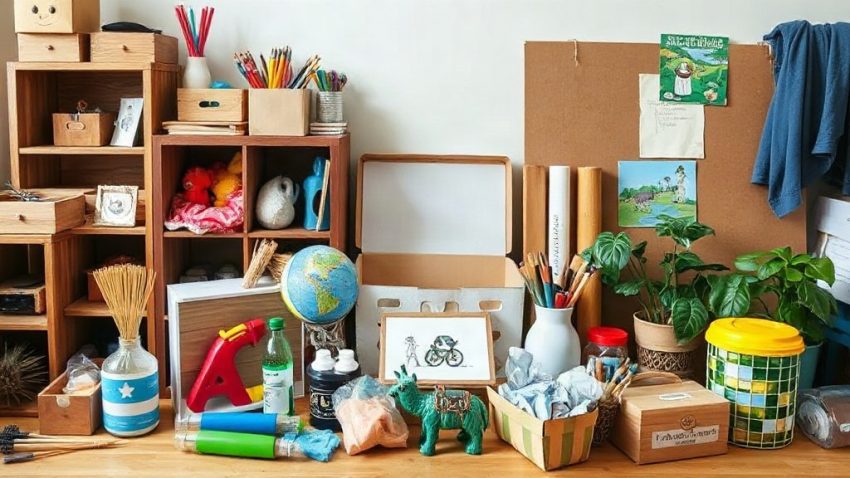
A milk carton, a stack of old magazines, and a box of mismatched buttons can become a lesson in resourcefulness, and that is exactly why classroom upcycling projects belong in every elementary and middle school schedule. Teachers often want to teach recycling without adding another worksheet, and upcycling turns waste into a hands-on lesson kids remember. The trick is picking projects that fit your time, budget, and storage space. This guide ranks nine practical options and explains what each one actually teaches.
Many of these activities also connect naturally to broader sustainable living ideas that families can repeat at home. That link between school and home is where habits stick.
Quick answer: Choose projects that use clean waste materials your school already produces, such as paper scraps, cardboard, and plastic bottles. Start with one simple, high-success project like seed paper or a cardboard organizer, then build toward longer builds. The best projects pair making with a short discussion about why the material was saved from the trash.
Our picks at a glance
The nine projects below cover a spread of ages, time commitments, and skill levels. Each one uses ordinary waste and basic supplies you likely already have. Here is how they compare before you read the details.
Comparison: quick wins vs. multi-session builds
The table sorts each project by time, age range, and the recycling concept it teaches best. Notice that the fastest projects still carry a strong message, which makes them ideal for busy weeks.
| Project | Time | Best ages | Core lesson |
|---|---|---|---|
| Seed paper cards | 1–2 sessions | 7–12 | Paper can be remade, not just discarded |
| Cardboard desk organizers | 1 session | 8–13 | Shape and function of packaging |
| Bottle self-watering planters | 1 session | 9–14 | Reuse before recycling |
| Magazine collage art | 1 session | 6–12 | Material value and creativity |
| Tin can lanterns | 1–2 sessions | 10–14 | Metal as a resource |
| Old T-shirt tote bags | 2 sessions | 10–14 | Textile waste |
| Bottle cap mosaics | 2 sessions | 6–11 | Sorting and collection |
| Cardboard marble runs | 2–3 sessions | 8–13 | Engineering with reused material |
| Classroom compost bin | Ongoing | 8–14 | Organic waste cycles |
A pattern emerges from the table: the fastest projects use paper and cardboard, while the longer builds use harder materials like metal and fabric. Older students handle tools better, so save tin and textile projects for upper grades. Younger kids thrive with paper, glue, and collage, where mistakes are easy to fix.
Cost is worth naming too. Most of these projects need only scissors, glue, tape, and paint. The seed paper project needs a blender, which many schools already have in a staff room. Check with your custodian before you raid the recycling bin, and ask families to donate clean materials instead of buying new ones.
The list
The ranking below leads with the projects that deliver the most learning per minute of prep. Each entry explains why it earns its place and what to watch out for.
1. Seed paper cards
This is the strongest all-round pick because it teaches the full paper cycle in one activity. Kids tear up scrap paper, soak it, blend it, and press it into new sheets with seeds mixed in. The lesson lands hard: the paper they throw away can become paper again.
Prep takes about 30 minutes the night before if you pre-soak the scraps. Drying needs a full day, so plan two sessions. Use plain seeds like basil or marigold, and skip anything treated with chemicals. For a deeper dive into the technique, see this guide to eco-friendly paper crafting before you start.
2. Cardboard desk organizers
Every classroom generates a steady supply of shipping boxes, and this project turns them into something useful. Students measure, cut, and fold cardboard into pen cups, file slots, or supply caddies. They keep the result on their own desks, so the lesson stays visible all year.
The recycling message here is about function. A box that held supplies can hold supplies again, which shows that a material’s life does not end after one use. Safety note: younger students need help with box cutters. Pre-cut the tough sections and let kids handle folding and decorating.
3. Bottle self-watering planters
Cut a plastic bottle in half, invert the top into the bottom, and add a cotton wick. Fill the top with soil and a seedling, and the wick draws water upward. Kids watch a discarded bottle keep a plant alive for weeks.
This project teaches the difference between recycling and reusing. Recycling breaks a bottle down; reuse gives it a second job first. Pair each planter with a plant journal so students track growth and water use over a month.
4. Magazine collage art
Old magazines and catalogs make excellent art supplies, and this project needs almost no prep. Students cut images and text into collages around a theme like "future cities" or "food chains." The waste becomes the medium.
The lesson is about material value. Ask students to notice how much paper arrives in the mail and how quickly it becomes waste. A short sorting session before cutting reinforces that paper belongs in the recycling bin, not the trash.
5. Tin can lanterns
Clean tin cans become lanterns with holes punched in patterns and a candle or LED light inside. The effect is striking, and the project teaches that metal is a valuable material worth recovering.
This is a supervised activity only. Cut edges are sharp, so file them smooth and use a nail and hammer with close adult oversight. Save this one for upper grades and always wear gloves during prep.
6. Old T-shirt tote bags
A single T-shirt becomes a sturdy bag with a few cuts and knots. No sewing is required, which makes it accessible to a wide age range. Students bring in shirts from home, so the material costs nothing.
Textile waste is a big topic, and this project gives kids a concrete entry point. A shirt that no longer fits still has useful fabric in it. The bags double as book carriers, so the lesson travels home.
7. Bottle cap mosaics
Collect bottle caps for a few weeks, then sort them by color and press them into a cardboard or wood base to form pictures. The collective effort matters here: one cap is trash, but a thousand caps become art.
The project teaches sorting and group problem-solving. Assign each table a color and watch the negotiation begin. Keep a collection bin near the door so caps never reach the trash in the first place.
8. Cardboard marble runs
Teams build ramps, tunnels, and drops from cardboard tubes and sheets, then test marbles through the course. Iteration is built in, because the first design rarely works.
This is your engineering pick. Students learn to revise, measure, and cooperate, all while reusing packaging. Give each group a fixed supply of cardboard and tape so they must plan before cutting.
9. Classroom compost bin
A sealed bin with scraps, shredded paper, and a little soil turns lunch waste into compost over several weeks. Students rotate as bin monitors and record what breaks down fastest.
This is the longest-running project on the list, and that is its strength. Composting shows the biological side of waste. Keep it sealed and balanced to avoid smells, and check district rules before storing food scraps indoors.
How to choose the right option
Pick based on three things: your available time, your students’ ages, and how much mess you can manage. A weekly 40-minute slot favors single-session projects like collages and organizers. A longer unit fits seed paper, marble runs, or composting.
Age shapes the tool list. Under age nine, stick to paper, glue, and fabric. From age ten up, add supervised cutting, hammering, or heat tools. Always check school safety policies first, and get parent permission for anything involving sharp metal.
Storage is the hidden constraint. Drying seed paper needs flat space for a day, and marble runs need room to stay up between sessions. If your room is shared, choose projects that finish in one go or fit on a shelf.
Ask what waste your school actually produces. A cafeteria generates bottles and cans; an office generates paper and cardboard. Matching a project to the school’s real waste stream makes the lesson local and convincing.
Pair making with a short reflection
Every project gets stronger with a five-minute wrap-up. Ask students three questions: Where did this material come from? What would have happened to it? What will you make next? A quick journal entry or class chart captures the answers.
Reflection is what turns a craft into a recycling lesson. Without it, kids enjoy the activity but miss the point. With it, they start spotting reusable materials everywhere.
FAQ
How much do these projects cost?
Most cost little or nothing because the main materials come from waste. Budget for consumables like glue, tape, seeds, and paint. A single class set of seed paper supplies often costs less than a set of new workbooks.
What is the best project for a tight schedule?
Magazine collage art and cardboard desk organizers finish in one class period with minimal prep. Both need only scissors and glue. They also produce something students take home or keep, so the lesson persists.
Which projects suit younger children?
Seed paper, collage art, and bottle cap mosaics work well for ages six to nine. All three rely on tearing, gluing, and sorting rather than cutting hard materials. Adults should handle any blending or sharp tools.
How do I collect materials without clutter?
Set up labeled bins for paper, cardboard, caps, and fabric, and empty them monthly. Ask families for clean donations through a short note. Discard anything greasy, moldy, or from food packaging that cannot be washed.
Can these projects fit an existing curriculum?
Yes. Seed paper connects to plant science, marble runs to physics, and compost to biology. Map one project to a unit you already teach, and the recycling message arrives without extra class time.
Conclusion
The best classroom upcycling projects do two jobs at once: they give kids something real to make and something real to think about. Start with one quick win like seed paper or a desk organizer, then add a longer build once routines settle. Pair every project with a short reflection so the recycling lesson sticks. Choose your first project this week, gather clean materials from the school recycling bin, and let students see waste become something worth keeping.