

The best learning sites for new skills are Coursera, Udemy, Khan Academy, edX, and Skillshare. Each one fits a different goal. For example, Coursera and edX offer university-style courses. Udemy and Skillshare, on the other hand, teach hands-on skills through projects. Khan Academy covers school subjects for free.
The right site depends on what you want to learn. It also depends on your budget and your study style. This guide compares ten platforms in plain terms. Then it shows you how to choose one and stick with it.
What Makes a Learning Site Worth Your Time?
A good learning site has clear lessons, real practice, and a fair price. Before you sign up, check these three things.
Quality of the teaching
First, look at the teacher’s background and the course reviews. Read the low ratings too, because they often show real problems. For instance, some courses have old content or poor sound.
Practice and feedback
People learn faster when they do the work. So choose sites with quizzes, projects, or coding tasks. Watching videos alone rarely builds a skill.
Cost and flexibility
Many sites let you learn for free and charge only for certificates. Others charge a monthly fee. Therefore, compare the full cost before you commit. Also check whether you can study at your own pace.
Best Learning Sites for Career and Study Goals
Coursera, edX, and LinkedIn Learning are strong picks for career goals. They work with universities and big companies. As a result, employers often trust their courses.
Coursera
Coursera offers courses, certificates, and degrees from universities and companies. In most cases, you can watch lectures for free. However, you pay for graded work and certificates. It works well for data, business, and tech topics.
edX
Harvard and MIT started edX. Its courses focus on science, computing, and the humanities. Many courses let you audit for free. If you want a certificate, you pay for a paid track.
LinkedIn Learning
LinkedIn Learning teaches business, software, and design in short videos. Because it links to your LinkedIn page, you can share new skills with recruiters. Besides that, many libraries and schools give free access. So check yours first.
Best Free Learning Sites for Students
Khan Academy, MIT OpenCourseWare, and freeCodeCamp let you learn without paying. They suit students on a tight budget. Still, free does not mean poor quality. People all over the world trust these sites.
Khan Academy
Khan Academy is a nonprofit that teaches math, science, and economics. Its lessons are short and clear. Practice questions then help you check your progress. It is a good fit for school and early college subjects.
MIT OpenCourseWare
MIT OpenCourseWare shares real class materials from MIT. You get notes, tasks, and often video lectures. However, there are no grades or certificates. Even so, it is a great way to study a subject in depth.
freeCodeCamp
freeCodeCamp teaches web design, data skills, and more. Here, you learn by building real projects. The community is large and kind. Because of that, you rarely stay stuck for long.
Best Learning Sites for Creative and Practical Skills
Skillshare, Udemy, and Domestika focus on hands-on skills. They cover design, photos, writing, and business. In most classes, you finish with a project to show others.
Skillshare
Skillshare charges a monthly fee for all its classes. The classes are short and project-based. Creators teach most of them. For that reason, it suits design, drawing, video, and freelance skills.
Udemy
Udemy sells single courses for a one-time price. Sales happen often, so you rarely pay the full price. The choice is huge. Since quality varies, read the reviews and watch the free preview first.
Domestika
Domestika teaches creative courses led by working artists and designers. Some courses come with subtitles in several languages. That helps a lot if English is not your first language.
Master Languages and Coding with Smart, Bite-Sized Learning
Platforms like Duolingo for language acquisition and Codecademy for programming have revolutionized skill development by turning complex subjects into short, interactive micro-lessons tailored for busy schedules. As modern platforms expand their educational ecosystems, adaptive technology is fundamentally changing how self-directed learners master challenging subjects. To explore how machine learning and personalized feedback loops are reshaping independent study, discover why AI tutors are becoming popular in e-learning.
Duolingo
Duolingo turns language study into a daily game. Each lesson takes only a few minutes. As a result, it helps you build a habit fast. But to speak well, you should also practice with real people.
Codecademy
Codecademy lets you write code right in your browser. You get quick feedback, so mistakes teach you fast. Afterward, you can move on to bigger projects with more confidence.
How to Pick the Right Learning Site
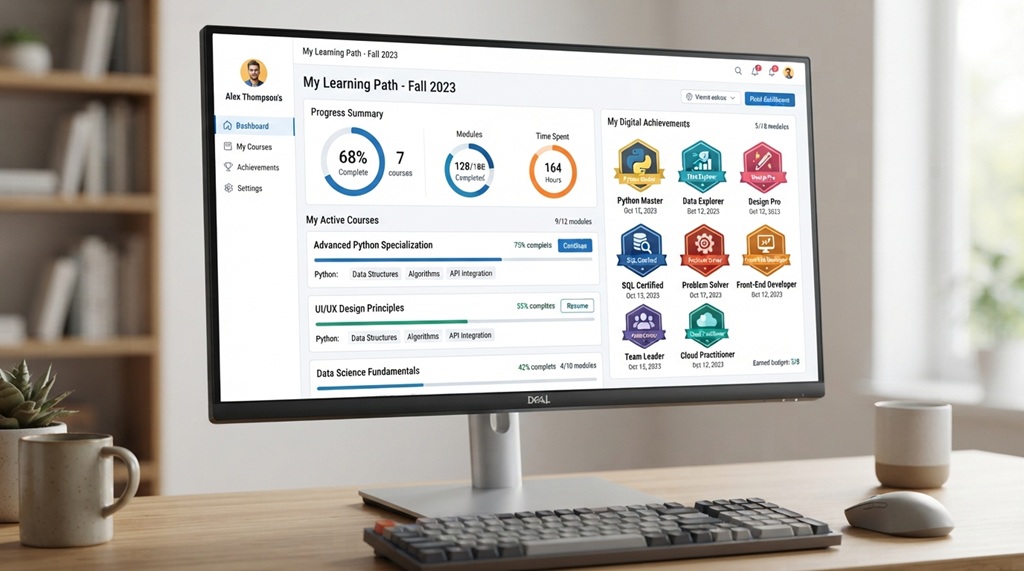
Start with your goal, not with the site. Ask yourself what you want to do with the skill in three months. Then pick the site that fits that goal.
Match the site to your goal
If you want a new job, pick a site with certificates that employers know. If you want a hobby, choose fun and short lessons. Likewise, if you plan to take exams, look for practice tests.
Try before you pay
Most sites offer free previews or trials. So use them. Spend one hour on two or three sites. After that, keep the one that feels easiest to follow.
A tip most guides skip: stack two sites
Don’t rely on just one site. Instead, use one to learn and another to practice. For example, study a topic on Coursera. Then build a small project with freeCodeCamp or a real task from your life. This mix turns facts into skill. In addition, it helps you remember more.
How to Stay Consistent With Online Learning
You stay consistent when you study in small, set blocks. In fact, twenty to thirty minutes a day beats one long session each week.
Set a simple schedule
First, pick a time and a place. Next, add it to your calendar. Finally, treat it like a class you can’t miss.
Track your progress
Write down one thing you learn each day. Also, set a small goal for each week. Because you see your progress, you stay motivated.
Join a community
Study groups and forums make learning feel less lonely. There, you can ask questions and share wins. Many sites have discussion boards. Local student groups work well too.
FAQ: Top Learning Sites for New Skills
What is the best learning site for beginners?
Khan Academy is a great start for school subjects. Codecademy and Duolingo work well for coding and languages. So pick the one that matches your topic.
Are online learning sites really free?
Some are. Khan Academy, MIT OpenCourseWare, and freeCodeCamp cost nothing. On the other hand, Coursera and edX let you audit for free but charge for certificates.
Do employers accept certificates from online courses?
Many do, especially from well-known providers. However, a set of real work samples often counts for more. Therefore, use both for the best result.
How long does it take to learn a new skill online?
It depends on the skill. Simple skills may take a few weeks. In contrast, coding or a new language can take many months of steady practice.
Can I use more than one learning site at once?
Yes. In fact, it often works well. Use one site for lessons and another for practice. Just don’t start too many courses at the same time.
Conclusion
Each of the top learning sites for new skills serves a different need. Coursera and edX suit career growth. Khan Academy, MIT OpenCourseWare, and freeCodeCamp cost nothing. Meanwhile, Skillshare, Udemy, and Domestika teach creative skills. Duolingo and Codecademy help new learners with languages and code.
First, pick one goal. Next, try a free lesson on two sites. Finally, build a small daily habit. That simple plan will take you further than any single site.