

Key Takeaways
- AI tools are transforming classrooms in 2026 by supporting personalized learning, student engagement, and instructional efficiency.
- Teachers use AI for lesson planning, content creation, grading, assessment, and classroom management, allowing more time for direct student support.
- Adaptive learning platforms adjust educational content based on individual student performance, helping learners progress at their own pace.
- AI tutoring systems provide immediate feedback and personalized assistance, making learning more accessible both inside and outside the classroom.
- Writing assistants help students improve grammar, structure, clarity, and critical thinking while supporting the writing process.
- Automated assessment tools reduce administrative workload and provide faster insights into student progress and learning gaps.
- AI enhances accessibility through features such as text-to-speech, translation support, reading assistance, and personalized accommodations.
- Data-driven analytics help educators identify struggling students early and make informed instructional decisions.
- Responsible AI adoption requires strong privacy protections, ethical guidelines, teacher training, and clear academic integrity policies.
- AI works best as a teaching assistant rather than a replacement for educators, with human relationships and professional judgment remaining essential.
- Schools that combine AI technology with effective teaching practices can create more engaging, inclusive, and successful learning environments.
- Starting with one specific classroom challenge and gradually implementing AI solutions is often the most effective approach for educators.
Introduction
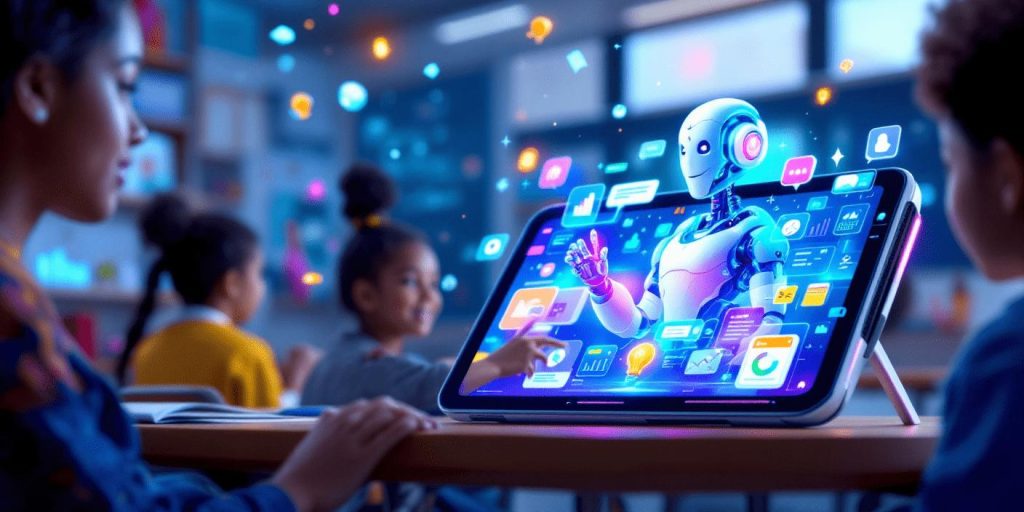
Artificial intelligence is no longer a future concept in education. It is already transforming classrooms across the United States. From personalized learning platforms to intelligent tutoring systems, AI tools help teachers save time while helping students learn more effectively.
The rapid adoption of educational technology continues to reshape modern learning. According to the National Center for Education Statistics and research from UNESCO, digital learning tools have become a critical part of education worldwide. Furthermore, studies show that personalized learning experiences can improve student engagement and academic outcomes when implemented correctly.
As schools enter 2026, educators face an important question: how can they use AI responsibly and effectively to enhance learning? This guide explores the most valuable AI tools, practical classroom applications, benefits, challenges, and best practices that teachers, administrators, and parents should understand.
What Are AI Tools in the Classroom?
AI tools in the classroom are software applications that use artificial intelligence to support teaching, learning, assessment, and classroom management.
These systems analyze data, recognize patterns, and provide intelligent recommendations. As a result, they can adapt educational content based on student performance and learning preferences.
Unlike traditional educational software, AI-powered tools continuously learn from interactions. Therefore, they become more effective over time.
Common examples include:
- AI writing assistants
- Intelligent tutoring systems
- Adaptive learning platforms
- Automated grading tools
- Language learning assistants
- AI research assistants
- Classroom analytics platforms
- Lesson planning tools
Many schools now integrate these technologies into daily instruction to improve efficiency and learning outcomes.
Why AI Matters in Education in 2026
Education faces several challenges. Teachers often manage large classrooms, diverse learning needs, administrative tasks, and increasing expectations.
AI helps address these challenges in practical ways.
Personalized Learning at Scale
Every student learns differently. Some grasp concepts quickly, while others need additional support.
AI platforms analyze student progress and adjust content accordingly. Consequently, learners receive customized instruction that matches their needs.
This personalized approach can improve retention, confidence, and academic performance.
Reduced Administrative Work
Teachers spend significant time grading assignments, creating materials, and tracking progress.
AI automates many repetitive tasks. Therefore, educators can focus more on instruction and student relationships.
Enhanced Student Engagement
Interactive AI systems create more engaging learning experiences.
Students often respond positively to immediate feedback, personalized recommendations, and adaptive challenges.
As a result, classrooms become more dynamic and motivating.
Key Types of AI Tools Used in Classrooms
AI Writing Assistants
Writing assistants help students improve grammar, sentence structure, clarity, and organization.
These tools do not replace writing instruction. Instead, they support the learning process by providing guidance and suggestions.
Benefits include:
- Faster feedback
- Better writing quality
- Improved revision skills
- Increased student confidence
Teachers can also use writing assistants to create rubrics, lesson materials, and classroom communications.
AI Tutoring Systems
AI tutors provide personalized instruction outside traditional classroom hours.
They answer questions, explain concepts, and offer practice exercises based on student needs.
Advantages include:
- Individualized support
- Immediate responses
- Flexible learning schedules
- Consistent reinforcement
Students who need extra help often benefit from having access to continuous learning support.
Adaptive Learning Platforms
Adaptive learning technology adjusts educational content based on performance.
If a student struggles with a topic, the platform provides additional practice. Conversely, advanced learners receive more challenging material.
This creates a more efficient learning experience for diverse classrooms.
Automated Assessment Tools
Assessment remains one of the most time-consuming aspects of teaching.
AI grading systems help evaluate:
- Quizzes
- Multiple-choice exams
- Writing assignments
- Practice exercises
Although teacher oversight remains important, these systems significantly reduce workload.
Practical Applications of AI in Different Subjects
AI in Mathematics Education
Math classrooms benefit greatly from intelligent learning systems.
Students receive step-by-step guidance while solving problems. Additionally, AI can identify recurring mistakes and recommend targeted practice.
Teachers gain insights into:
- Common misconceptions
- Learning gaps
- Progress trends
- Individual performance patterns
This data helps educators provide more effective instruction.
AI in Language Arts
Language arts teachers use AI to support reading comprehension, writing development, and vocabulary building.
Students receive feedback quickly, which encourages continuous improvement.
Moreover, AI can generate reading questions, discussion prompts, and writing exercises that align with curriculum objectives.
AI in Science Education
Science instruction often involves complex concepts.
AI tools help visualize scientific processes through simulations and interactive learning experiences.
Students can explore:
- Biology systems
- Physics principles
- Chemistry reactions
- Environmental science concepts
These interactive experiences often improve understanding and retention.
AI in Social Studies
Social studies classes use AI for research assistance, content analysis, and historical exploration.
Students can investigate topics more efficiently while developing critical thinking skills.
Educators can also create personalized research projects that match student interests and learning goals.
Top Benefits of AI Tools in the Classroom
Improved Learning Outcomes
Personalized instruction helps students focus on areas where they need improvement.
Consequently, many learners progress faster than they would through one-size-fits-all instruction.
Better Accessibility
AI supports students with diverse learning needs.
Features often include:
- Text-to-speech functionality
- Language translation
- Reading assistance
- Personalized accommodations
These capabilities help create more inclusive learning environments.
Increased Teacher Productivity
Teachers save valuable time through automation.
Rather than spending hours on administrative tasks, educators can dedicate more attention to student interaction and instructional planning.
Real-Time Feedback
Immediate feedback accelerates learning.
Students no longer wait days for responses. Instead, they receive guidance while actively working on assignments.
This continuous feedback loop supports stronger academic growth.
Data-Driven Decision Making
AI provides actionable insights into student performance.
Teachers can identify trends quickly and intervene before learning gaps become larger problems.
Challenges and Risks of Using AI in Education
While AI offers substantial benefits, schools must address several concerns.
Data Privacy and Security
Student information requires careful protection.
Educational institutions should evaluate privacy policies and ensure compliance with relevant regulations.
Schools should prioritize platforms with strong security practices and transparent data handling procedures.
Academic Integrity Concerns
Some educators worry that students may misuse AI for assignments.
Therefore, schools should establish clear guidelines regarding acceptable use.
Teaching responsible AI usage remains essential.
Bias in AI Systems
Artificial intelligence systems learn from data. If training data contains bias, outputs may reflect those limitations.
Educators should evaluate AI-generated content critically and encourage students to verify information.
Overreliance on Technology
Technology should enhance learning, not replace human teaching.
Strong teacher-student relationships remain the foundation of effective education.
Therefore, AI should function as a support tool rather than a substitute for educators.
Best Practices for Implementing AI Tools in Schools
Successful implementation requires thoughtful planning.
Start With Clear Goals
Schools should identify specific objectives before adopting AI technology.
Examples include:
- Improving reading performance
- Reducing grading workload
- Supporting personalized learning
- Enhancing student engagement
Clear goals improve decision-making and implementation success.
Provide Teacher Training
Professional development plays a crucial role.
Teachers need confidence and practical skills to integrate AI effectively into instruction.
Ongoing support helps maximize educational value.
Establish Responsible Use Policies
Schools should develop clear guidelines regarding:
- Student use
- Teacher use
- Data protection
- Academic honesty
- Ethical considerations
These policies create consistency and accountability.
Evaluate Results Regularly
Implementation should include continuous evaluation.
Schools can monitor:
- Student achievement
- Engagement levels
- Teacher satisfaction
- Technology effectiveness
Regular assessment helps refine strategies over time.
Real World Example of AI Success in Education
Consider a middle school implementing an adaptive math platform.
Initially, teachers struggled to address varying skill levels within the same classroom. Some students needed remediation, while others required advanced challenges.
After introducing AI-driven learning support, students received personalized practice based on performance data.
Within one academic year, teachers reported improved engagement and more efficient intervention strategies. Additionally, students demonstrated greater confidence because they worked at appropriate challenge levels.
This example illustrates how thoughtful implementation can create meaningful educational benefits.
The Future of AI Tools in the Classroom
The future of AI in education looks increasingly sophisticated.
Several emerging trends are expected to shape classrooms in the coming years.
Intelligent Learning Companions
Future AI systems will provide more personalized guidance throughout the learning journey.
Students may receive support tailored to their strengths, interests, and long-term goals.
Advanced Predictive Analytics
Schools will use predictive insights to identify learning challenges earlier.
This proactive approach can improve intervention effectiveness and student success.
Enhanced Accessibility Features
AI will continue expanding educational access for learners with disabilities and language barriers.
More inclusive classrooms will benefit from increasingly sophisticated support tools.
Teacher-Centered Innovation
The most successful educational technologies will focus on empowering teachers.
Rather than replacing educators, future systems will help them deliver higher-quality instruction with greater efficiency.
How Teachers Can Get Started With AI Today
Teachers interested in AI adoption can begin with a simple approach.
Follow these steps:
- Identify a classroom challenge.
- Research appropriate AI solutions.
- Test one tool with a small group.
- Gather feedback from students.
- Evaluate learning outcomes.
- Expand implementation gradually.
Starting small reduces risk and allows educators to build confidence before scaling adoption.
Conclusion
Artificial intelligence is reshaping education in powerful ways. From personalized learning and automated assessment to accessibility support and instructional planning, AI tools provide meaningful opportunities for both teachers and students.
However, successful implementation requires thoughtful planning, ethical guidelines, and ongoing evaluation. Schools that combine innovative technology with strong teaching practices can create more engaging, effective, and inclusive learning environments.
As classrooms continue evolving in 2026, educators who embrace responsible AI adoption will be better positioned to support student success. Start by exploring one AI tool that addresses a specific classroom need and build from there.
FAQs
What are AI tools in the classroom?
AI tools in the classroom are educational technologies that use artificial intelligence to support teaching, learning, assessment, and classroom management through automation and personalized instruction.
Can AI replace teachers?
No. AI cannot replace teachers. Effective education depends on human relationships, mentorship, creativity, and professional judgment. AI works best as a support tool that enhances teaching.
How does AI improve student learning?
AI improves learning through personalized instruction, immediate feedback, adaptive content, and targeted support based on individual student performance.
Are AI classroom tools safe for students?
Most reputable educational platforms prioritize security and privacy. However, schools should carefully review data protection practices and ensure compliance with relevant regulations.
What is the biggest benefit of AI in education?
The biggest benefit is personalized learning. AI helps deliver customized educational experiences that meet students at their individual learning levels and needs.