

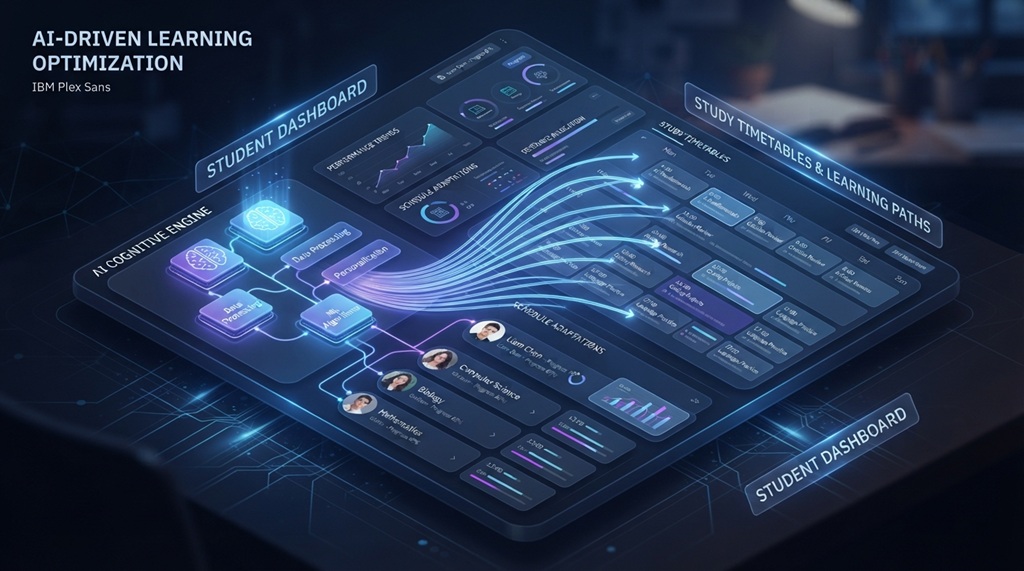
Generative AI study planning works by turning your goals, deadlines, and learning habits into a personalized schedule. You type in what you need to learn, when your exam is, and how much time you have. The AI then builds a day-by-day plan and adjusts it as you go.
This is different from the static planners of a few years ago. Older apps just gave you a template calendar. Today’s tools use large language models to understand context. They know that “prepare for the bar exam” needs a different structure than “learn basic Spanish for a trip.”
Students, tutors, and even corporate trainers now use these tools daily. The technology has moved past simple reminders. It has become something closer to a personal academic assistant.
How the AI Actually Builds Your Schedule
The AI collects your inputs first, then runs them through a language model trained on patterns of effective learning. It looks at your deadline, your current skill level, and your available hours per week.
Step-by-Step Breakdown
The process usually follows a similar pattern across most tools:
- You answer a few questions about your subject, goal, and timeline.
- The AI breaks the topic into smaller learning chunks.
- It assigns each chunk to a specific day or session.
- It adds review sessions based on spaced repetition research.
- It generates the plan as a calendar, checklist, or both.
Why Chunking Matters
Breaking large topics into small pieces helps because your brain retains smaller chunks of information better than large blocks. A generative AI tool might split “Organic Chemistry” into daily topics like functional groups, reaction mechanisms, and nomenclature. Each piece becomes a manageable task instead of one huge, intimidating subject.
What Makes These Tools “Generative” vs Just Automated
A generative AI tool creates original content and structure for your specific situation, rather than picking from a fixed set of templates. This is the key difference from older study apps.
A basic planner might offer three templates: “light,” “moderate,” or “intense.” You pick one, and it fills in a generic calendar. A generative tool instead reads your actual constraints and writes a plan that exists nowhere else. It can also explain its reasoning if you ask why it scheduled something a certain way.
This matters because two students studying the same subject rarely need the same plan. One person might already know the basics and need only practice problems. Another might need to start from the fundamentals. Generative tools can tell the difference when you describe your background.
Real Features You’ll Find in Study Planning Tools Today
Most current tools share a similar set of features, though the exact mix varies by app. Below are the ones that show up most often.
Adaptive Rescheduling
If you miss a study session, the plan doesn’t just sit broken. Good tools automatically shift remaining tasks to fit your new timeline, often shortening less critical sections rather than cutting corners on your weakest areas.
Progress-Based Adjustment
Many tools now connect to quiz results or practice test scores. If you’re scoring poorly on a topic, the AI adds extra review time there and reduces time on topics you’ve already mastered.
Integration With Calendars and Task Apps
Tools increasingly sync with Google Calendar, Notion, or task managers. This means your study blocks appear alongside your other commitments instead of living in a separate app you forget to check.
Multi-Format Output
You can often get the same plan as a visual timeline, a simple checklist, or even a conversational daily briefing. This flexibility helps different types of learners engage with the plan in a way that suits them.
The Critical Limits of Generative AI in Study Planning
While generative AI can revolutionize how students structure their learning, relying on these systems as absolute authorities introduces clear operational risks. Modern platforms excel at algorithmic schedule optimization and routine task automation, yet they fundamentally lack human intuition, struggle with unpredictable workload shifts, and occasionally generate flawed timelines. Just as exploring why automated grading is essential for teachers highlights how AI optimizes administrative workloads across education, study planners must be viewed as supplementary tools streamlining logistical workflows while requiring critical human oversight to ensure schedules remain realistic, adaptive, and meaningful.
It Can’t Know Your Real Focus Level
The AI works from what you tell it, not from what’s actually happening in your brain. If you say you have four focused hours a day but you’re actually distracted half the time, the plan will look accurate on paper while not matching your real output.
Generic Advice Still Slips Through
Even sophisticated tools sometimes default to generic study advice when your situation is unusual. A student studying for a niche certification exam might get a plan that feels slightly off, because the model has less specific training data on that exact subject.
Over-Reliance Can Weaken Planning Skills
According to education researchers who study self-regulated learning, students who never practice planning their own study sessions may struggle when the tool isn’t available, such as during an unexpected schedule change or a test with no advance notice. Using AI as training wheels rather than a permanent crutch tends to work better long term.
A Practical Angle Most Articles Skip: Treat the AI Plan as a Draft, Not a Contract
Most guides tell you to just follow whatever the AI generates. A more useful approach is to treat the first plan as a rough draft that you edit before committing to it.
Read through the plan once before starting. Ask yourself if the pacing actually matches your energy levels at different times of day. If the AI scheduled dense reading for 9 PM but you know you’re mentally checked out by then, move it. The tools are flexible enough to handle this kind of manual adjustment, and doing this one edit often improves adherence more than any feature the app offers.
This small habit also keeps you engaged with your own learning process. You stay the decision-maker. The AI becomes a fast first draft, not an authority you follow blindly.
How to Choose a Generative AI Study Planning Tool
Picking the right tool depends mostly on how complex your study needs are and how deeply you want the AI involved. Simpler needs call for simpler tools.
If you’re studying for one test with a clear syllabus, a lightweight planner that just chunks content and adds reminders is often enough. If you’re managing multiple subjects, a certification, and a job at the same time, look for tools with calendar integration and adaptive rescheduling, since manual adjustment becomes harder to keep up with as complexity grows.
Price also varies widely. Some tools are free with basic features, while advanced adaptive planning often sits behind a subscription. Testing the free tier for a week before paying is usually enough to tell if the tool’s suggestions actually fit how you work.
Frequently Asked Questions
Is generative AI study planning free to use?
Many tools offer a free tier with basic scheduling features. Advanced features like adaptive rescheduling or progress tracking usually require a paid subscription, though pricing varies significantly between apps.
Can generative AI create a study plan for any subject?
Yes, most tools can handle any subject you describe, since they work from language rather than a fixed subject list. However, plans for common subjects like standardized tests tend to be more precise than plans for very niche or highly specialized topics.
How is this different from a regular study schedule template?
A template gives you the same generic structure regardless of your situation. Generative AI reads your specific goals, timeline, and current knowledge level, then writes a plan tailored to those details instead of filling in a fixed format.
Does the AI plan update if I fall behind?
Most modern tools do adjust automatically when you miss a session or report falling behind. They typically shift remaining tasks and may shorten lower-priority material to help you catch up without abandoning the plan entirely.
Should I trust the AI plan completely, or should I make changes?
You should review and adjust it. The AI doesn’t know your real energy levels, distractions, or personal habits unless you tell it directly, so a quick manual review before committing to the schedule usually produces better results.
Final Thoughts
Generative AI study planning now goes far beyond simple reminders and templates. It builds custom, adaptive schedules based on your actual goals and adjusts as your progress changes. The technology works best when you treat it as a smart starting point rather than a fixed rulebook review the plan, tweak the pacing to fit your real habits, and let the AI handle the heavy lifting of organizing your time.