
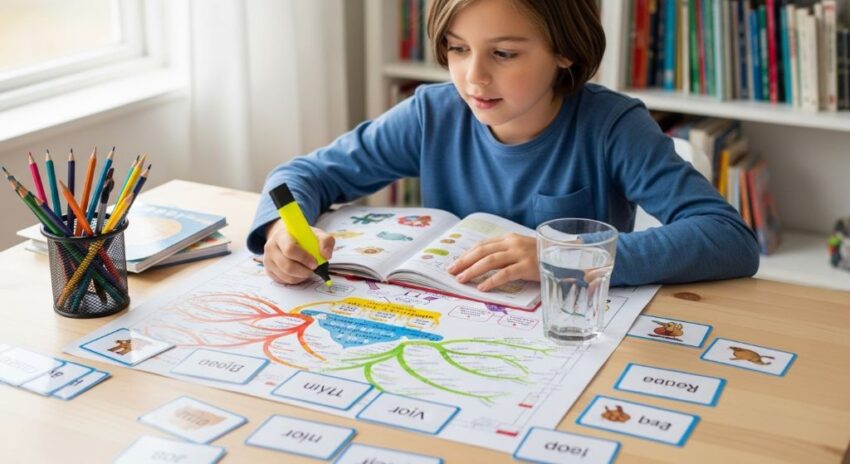
Every child has the ability to learn. However, not every child learns in the same way. Some kids absorb information quickly through stories. Others need to move around or draw pictures to understand new ideas. Brain-based learning takes all of this into account. It looks at how the brain naturally works and uses that knowledge to make studying easier and more effective.
Therefore, if your child struggles with homework or seems bored during study time, the problem may not be effort. It could simply be the method. This article shares the best study tips for kids that are grounded in how the brain actually learns.
What Is Brain-Based Learning?
Brain-based learning is an approach to education that uses research from neuroscience. It focuses on how the brain processes, stores, and recalls information. The idea is simple. When teaching matches how the brain works, children learn faster and remember more.
Additionally, brain-based learning considers the role of emotions, movement, sleep, and environment in the learning process. It is not a single teaching style. Instead, it is a set of principles that guide how we help children study.
Why Traditional Study Methods Often Fall Short
Many children are taught to read a chapter, highlight key points, and repeat facts out loud. However, research shows that passive reading and rote memorization are among the least effective study strategies. The brain does not hold onto information that lacks meaning or emotional connection.
Furthermore, long study sessions without breaks can actually harm focus and retention. The brain needs rest to transfer short-term memories into long-term storage. Therefore, studying smarter means working with the brain, not against it.
Create a Calm and Comfortable Study Environment
The brain learns best when it feels safe. Stress and anxiety activate the brain’s threat response, which makes it harder to focus and absorb new information. Therefore, the first step is creating a study space that feels calm and welcoming.
Make sure the area is well-lit and free from distractions. Keep the desk tidy, because clutter can cause mental stress. Allow your child to personalize the space with a plant, a favorite mug, or a small decoration. These small touches help the brain feel comfortable and ready to work.
Additionally, background noise matters. Some children focus better in silence. Others do well with soft instrumental music. Try both and see what helps your child stay on task.
Use the Power of Breaks and Movement
One of the most important brain-based study tips is to take regular breaks. The brain can only focus deeply for about 20 to 25 minutes at a time, especially in younger children. After that, attention begins to drop.
The Pomodoro Technique is a great tool here. It involves studying for 25 minutes and then taking a 5-minute break. After four sessions, take a longer break of 15 to 20 minutes. This method keeps the brain fresh and reduces mental fatigue.
Moreover, physical movement during breaks has proven benefits. A short walk, some jumping jacks, or even dancing to a song helps increase blood flow to the brain. This, in turn, improves focus and memory when the child returns to studying.
Connect New Information to What Kids Already Know
The brain learns by building on existing knowledge. This process is called making connections. When a child links a new idea to something they already understand, the brain creates stronger neural pathways. As a result, the information is easier to recall later.
For example, if your child is learning about fractions, you might connect the concept to slicing a pizza. If they are studying the water cycle, ask them to think about how rain comes after clouds gather. These everyday connections make abstract ideas concrete.
Additionally, using stories is a powerful technique. The brain is wired for narrative. When facts are placed inside a story, children remember them far better than when they are presented as a plain list.
Encourage Multi-Sensory Learning
The brain processes information through multiple pathways. Therefore, using more than one sense during studying strengthens memory. This is sometimes called multi-sensory learning.
Here are a few ways to apply this approach:
- Ask your child to say key facts out loud while walking around the room.
- Encourage them to draw diagrams or mind maps to organize information visually.
- Let them use colored pens to group related ideas by color.
- Allow them to write key concepts in the air using their finger, which engages muscle memory.
- Use textured materials, models, or hands-on activities where possible.
The more senses involved in learning, the more parts of the brain are activated. This leads to deeper understanding and longer retention.

Teach Kids to Use Retrieval Practice
One of the most powerful study strategies backed by brain science is retrieval practice. This means actively pulling information out of memory, rather than simply reviewing notes.
Instead of re-reading a chapter, your child should close the book and try to write down everything they remember. Alternatively, they can use flashcards, take a practice quiz, or explain the topic to a parent or sibling as if they were the teacher.
This method works because every time the brain retrieves a piece of information, that memory becomes stronger. However, this only works if the retrieval is effortful. Easy recall does not build strong memory. Therefore, encourage your child to struggle a little before looking at the answer.
Use Spaced Repetition Instead of Cramming
Cramming the night before a test might feel productive, but the brain forgets most of what was reviewed within 24 hours. Spaced repetition is a much better approach. It involves reviewing information over multiple short sessions spread out over several days.
For instance, your child might study a new topic on Monday, briefly review it on Wednesday, and test themselves again on Friday. This pattern forces the brain to work harder to recall the information each time, which strengthens the memory over time.
Additionally, spaced repetition reduces study stress. Children feel less overwhelmed when they review material regularly instead of trying to absorb everything at once.
Prioritize Sleep and Good Nutrition
Sleep is not just rest for the body. It is essential for the brain to consolidate learning. During sleep, the brain replays and stores new information gathered during the day. Therefore, a child who studies hard but sleeps poorly will remember far less than one who studies moderately and sleeps well.
Aim for 8 to 10 hours of sleep per night for school-aged children. Avoid screens for at least an hour before bed, as blue light disrupts the brain’s natural sleep signals.
Furthermore, nutrition plays a direct role in brain function. Foods rich in omega-3 fatty acids, like walnuts and fish, support memory and concentration. Complex carbohydrates, such as oats and whole grains, provide steady energy for the brain. Encourage your child to eat a balanced breakfast before school and have a light snack before studying.
Harness the Role of Emotions in Learning
The brain pays more attention to things that carry emotional weight. Therefore, helping your child feel positive emotions during study time can dramatically improve how much they retain.
Celebrate small wins. Praise effort, not just results. Let your child choose the order of topics to give them a sense of control. Use humor, games, and creative activities to make learning enjoyable.
Additionally, avoid high-pressure situations before studying. If your child is anxious or upset, their brain is not in the right state to absorb new information. Take a few minutes to calm down, breathe deeply, and then begin.
Set Clear Goals Before Each Study Session
The brain works more efficiently when it knows what it is trying to achieve. Therefore, before each study session, help your child set one or two specific goals. For example, “I want to understand the three causes of the French Revolution” is better than “I want to study history.”
Clear goals give the brain direction. They also make it easier to know when a session has been successful. This builds confidence and motivation over time.
Conclusion
Brain-based learning is not a complicated idea. At its heart, it simply means paying attention to how the brain naturally works and using that understanding to study smarter. By creating a calm environment, using spaced repetition, encouraging movement, connecting new ideas to existing knowledge, and making learning multi-sensory, children can unlock their full learning potential.
Additionally, sleep, good nutrition, positive emotions, and clear goals all play important roles. Therefore, the best study tips for kids are not about studying longer. They are about studying in ways that work with the brain. When children learn this way, they not only perform better in school. They also begin to enjoy the process of learning itself.
Frequently Asked Questions
What age is brain-based learning most effective for?
Brain-based learning principles apply to children of all ages. However, they are especially impactful during the early school years, from ages 5 to 12, when the brain is developing rapidly and forming lasting learning habits.
How long should a child study each day?
For younger children aged 6 to 8, around 20 minutes of focused study per session is ideal. Older children aged 9 to 12 can manage 30 to 40 minutes. Short, consistent sessions are far more effective than long, infrequent ones.
Can brain-based learning help children with learning difficulties?
Yes. Brain-based strategies are particularly helpful for children with dyslexia, ADHD, or other learning challenges, as they offer multiple ways to engage with material and avoid relying on a single learning style.
Is it okay for kids to listen to music while studying?
Soft, instrumental music can help some children focus by masking distracting background noise. However, music with lyrics may interfere with reading and writing tasks. Experiment to find what works best for your child.
How can parents support brain-based learning at home?
Parents can help by creating a distraction-free study space, asking their child to explain what they have learned in their own words, encouraging regular breaks, ensuring adequate sleep, and offering calm, positive support during study time.
Related Topics:
Multiplication Speed Test: Boost Your Math Skills Fast
3 Secret Study Tips for Rapid Memory Encoding Techniques