
Key Takeaways
- Defining your target audience is essential for creating content that attracts, engages, and converts the right readers.
- Audience research should be based on real data from analytics, surveys, customer feedback, and user behavior rather than assumptions.
- Understanding demographics, interests, goals, and challenges helps create more relevant and valuable content.
- Audience personas transform research into practical profiles that guide content creation and messaging.
- Identifying pain points allows you to create content that solves real problems and builds trust.
- Understanding audience goals helps align content with the outcomes readers want to achieve.
- Segmenting your audience improves personalization and makes content more effective for different groups.
- Matching content to search intent increases user satisfaction, engagement, and SEO performance.
- Regularly monitoring audience behavior ensures your content strategy stays relevant as preferences and trends change.
- Businesses that clearly understand their audience typically achieve stronger engagement, higher conversions, and better long term content marketing results.
Introduction
Creating content without knowing who will read it is like giving a speech in an empty room. You may have great ideas, valuable insights, and strong writing skills, yet your content can still fail to connect if it reaches the wrong people. That is why understanding your audience is one of the most important steps in content marketing.
Research from the United States Census Bureau shows that demographic data continues to play a major role in understanding consumer behavior. Meanwhile, studies published by the Content Marketing Institute consistently show that successful marketers are more likely to document audience research and customer insights before creating content. These findings highlight a simple truth: content performs better when it is designed for a specific audience.
In this guide, you will learn exactly how to define your target audience for better content, attract the right readers, and create content that delivers meaningful results.
What Is a Target Audience?
A target audience is a specific group of people most likely to benefit from your content, product, service, or message. These individuals share common characteristics such as interests, demographics, goals, challenges, or buying behaviors.
Instead of trying to reach everyone, effective content focuses on the people who matter most. This approach helps improve engagement, increase trust, and generate better outcomes.
For example, a fitness blog could target:
- Busy working professionals
- New parents
- College students
- Adults over 50
Although all of these groups may be interested in fitness, each audience has different needs, concerns, and motivations.
Why Defining Your Target Audience Matters
Many content creators focus heavily on keywords and search engine rankings. While SEO is important, audience understanding remains the foundation of successful content.
When you clearly define your audience, you can:
- Create more relevant content
- Improve search intent alignment
- Increase engagement rates
- Build stronger trust
- Improve conversion rates
- Reduce content waste
- Strengthen brand authority
Moreover, readers stay longer when content speaks directly to their problems and goals.
Signs You Do Not Clearly Understand Your Audience
Before learning how to identify your audience, it helps to recognize common warning signs.
You may have an audience definition problem if:
- Website traffic is growing, but engagement remains low
- Readers rarely comment or share content
- Conversion rates remain disappointing
- Content topics feel random
- Email open rates continue to decline
- Visitors leave pages quickly
These indicators often suggest a mismatch between content and audience expectations.
Start With Your Existing Customers
One of the easiest ways to define a target audience is to study the people already engaging with your brand.
Look for patterns among:
- Customers
- Subscribers
- Social media followers
- Website visitors
- Community members
Pay attention to common characteristics such as:
Age Groups
Different age groups consume information differently. Younger audiences often prefer visual content and short videos. Older audiences may appreciate detailed guides and research-based articles.
Occupations
Job roles reveal professional challenges, goals, and interests. Understanding occupations helps you create highly relevant content.
Income Levels
Income can influence purchasing decisions, priorities, and content preferences.
Geographic Locations
Location affects language, culture, seasonal trends, and buying behavior.
The more patterns you identify, the clearer your audience profile becomes.
Conduct Audience Research
Audience research provides valuable insights beyond assumptions.
Analyze Website Analytics
Tools like analytics platforms reveal:
- Visitor demographics
- Traffic sources
- Popular content
- User behavior
- Device preferences
You can quickly discover which topics attract the most attention and which pages generate the highest engagement.
Review Social Media Insights
Social platforms offer detailed audience information.
Look at:
- Age ranges
- Gender distribution
- Interests
- Active hours
- Geographic locations
These insights help refine content strategies and publishing schedules.
Study Competitor Audiences
Your competitors may already serve similar audiences.
Review:
- Popular blog posts
- Social comments
- Community discussions
- Frequently asked questions
This research often reveals content opportunities and audience pain points.
Send Surveys
Direct feedback remains one of the most reliable research methods.
Ask questions such as:
- What challenges are you facing?
- What topics interest you most?
- What goals are you trying to achieve?
- Where do you consume content?
- What type of content do you prefer?
The answers often provide insights unavailable through analytics alone.
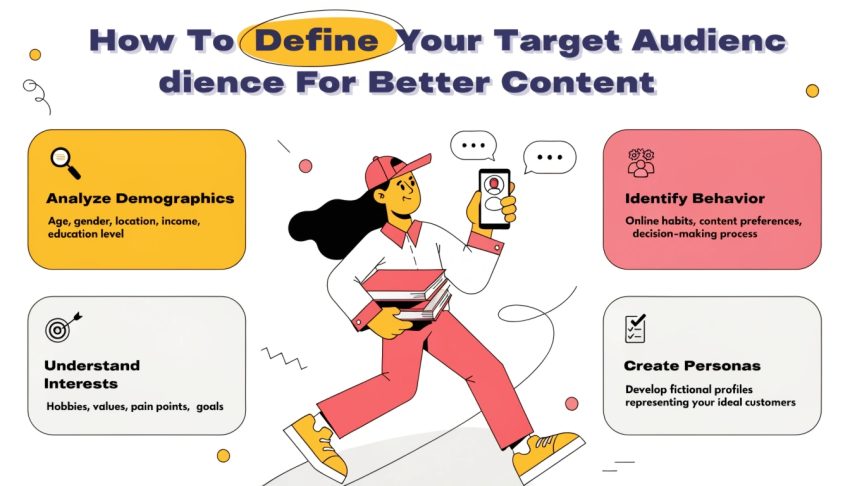
Create Detailed Audience Personas
An audience persona is a fictional representation of your ideal reader based on real data.
Personas help transform abstract audience information into practical content guidance.
Example Persona
Name: Sarah
Age: 34
Occupation: Marketing Manager
Location: Texas
Goal: Improve content performance
Challenge: Limited time and resources
Preferred Content:
- Practical guides
- Case studies
- Checklists
- Industry research
When creating content, imagine writing directly to Sarah. This approach naturally improves relevance and clarity.
Understand Audience Pain Points
Pain points are the problems your audience wants to solve.
People search for content because they need answers, solutions, or guidance.
Common categories include:
Financial Challenges
Examples include:
- Budget management
- Business growth
- Revenue improvement
Productivity Problems
Examples include:
- Time management
- Workflow optimization
- Efficiency improvement
Knowledge Gaps
Examples include:
- Learning new skills
- Understanding industry changes
- Improving expertise
Emotional Concerns
Examples include:
- Stress reduction
- Confidence building
- Career uncertainty
Content that addresses real pain points attracts more engagement and trust.
Identify Audience Goals
While pain points reveal problems, goals reveal desired outcomes.
Successful content connects both elements.
For example:
| Pain Point | Goal |
|---|---|
| Low website traffic | Increase visibility |
| Poor conversions | Generate more leads |
| Limited knowledge | Build expertise |
| Time constraints | Improve efficiency |
When content helps readers move from problem to solution, value increases significantly.
Segment Your Audience
Not every reader has identical needs.
Audience segmentation allows you to create more personalized content.
Common segmentation methods include:
Demographic Segmentation
Based on:
- Age
- Gender
- Education
- Occupation
- Income
Geographic Segmentation
Based on:
- Country
- State
- Region
- Climate
- Urban or rural areas
Behavioral Segmentation
Based on:
- Purchasing habits
- Browsing behavior
- Engagement patterns
- Loyalty levels
Psychographic Segmentation
Based on:
- Values
- Interests
- Lifestyles
- Motivations
Segmentation helps improve relevance without creating completely separate content strategies.
Match Content to Audience Intent
Search intent plays a major role in content success.
People search online for different reasons.
Informational Intent
Users want knowledge.
Examples:
- How to create content
- Audience research techniques
- SEO basics
Navigational Intent
Users want a specific website or brand.
Examples:
- Company names
- Platform searches
- Product pages
Transactional Intent
Users are ready to take action.
Examples:
- Sign up
- Download
- Request a demo
Aligning content with intent improves user satisfaction and search performance.
Use Data Instead of Assumptions
Many content creators make audience decisions based on personal opinions.
This approach often leads to inaccurate conclusions.
Instead, rely on:
- Surveys
- Analytics
- Customer interviews
- User testing
- Search data
- Community feedback
Data-driven decisions produce more accurate audience profiles and stronger content strategies.
Monitor Audience Behavior Regularly
Audience preferences change over time.
New technologies, cultural shifts, and industry trends constantly influence behavior.
Monitor:
- Traffic trends
- Engagement metrics
- Search queries
- Social interactions
- Email performance
Regular reviews help ensure your audience’s understanding remains current.

Common Mistakes When Defining a Target Audience
Many businesses make avoidable mistakes during audience research.
Trying to Reach Everyone
Broad targeting often creates generic content that resonates with nobody.
Ignoring Customer Feedback
Customer feedback provides direct insight into audience needs.
Focusing Only on Demographics
Demographics matter, but motivations and behaviors often reveal deeper insights.
Creating Personas Without Data
Personas should reflect research, not imagination.
Never Updating Audience Profiles
Markets evolve. Therefore, audience definitions require regular updates.
Avoiding these mistakes can significantly improve content effectiveness.
Real World Example
Imagine two content creators writing about email marketing.
The first creator targets everyone interested in marketing. Their content remains broad and generic.
The second creator targets small business owners with fewer than ten employees. They focus on limited budgets, simple automation, and practical tactics.
As a result, the second creator often achieves stronger engagement because the content directly addresses specific audience needs.
This example demonstrates the power of audience clarity.
Best Practices for Defining Your Target Audience
Follow these proven practices:
- Analyze current customers.
- Review website analytics.
- Conduct audience surveys.
- Study competitors.
- Create audience personas.
- Identify pain points.
- Understand goals.
- Segment your audience.
- Match content to intent.
- Update audience research regularly.
Together, these steps create a strong foundation for successful content marketing.
Conclusion
Understanding how to define your target audience for better content is not optional in today’s competitive digital landscape. It is the foundation of effective communication, stronger engagement, and sustainable growth. When you identify who your audience is, what challenges they face, and what goals they want to achieve, your content becomes more relevant and valuable.
Start by analyzing your current audience, gathering real data, and creating detailed personas. Then continue refining your understanding as audience behaviors evolve. The more precisely you define your audience, the more effective your content will become.
Take action today by reviewing your existing audience data and building your first detailed audience persona. That single step can transform your entire content strategy.
FAQs
How do I identify my target audience?
Start by analyzing current customers, website visitors, and social media followers. Then use surveys, interviews, and analytics data to identify common characteristics and behaviors.
Why is a target audience important for content marketing?
A clearly defined audience helps create relevant content that improves engagement, trust, conversions, and overall marketing effectiveness.
What is the difference between a target audience and a buyer persona?
A target audience represents a broader group of people. A buyer persona is a detailed profile of an ideal individual within that audience.
How often should I update my audience research?
Review audience data at least every six to twelve months. However, rapidly changing industries may require more frequent updates.
Can a business have multiple target audiences?
Yes. Many businesses serve several audience segments. In that case, separate personas and tailored content strategies help maintain relevance.